Hydraulics and thermal control
5 articlesWhat the machine delivers to the basket, and where it differs from what the gauge reports.
Espresso extraction engineering
brewedshot.com works through the mechanisms behind pressure, grinding, water and extraction, and follows the figures everyone repeats back to the documents they came from. Every number names its source. Where a number turns out to have no source that can carry it, that is the finding, and the article says so.
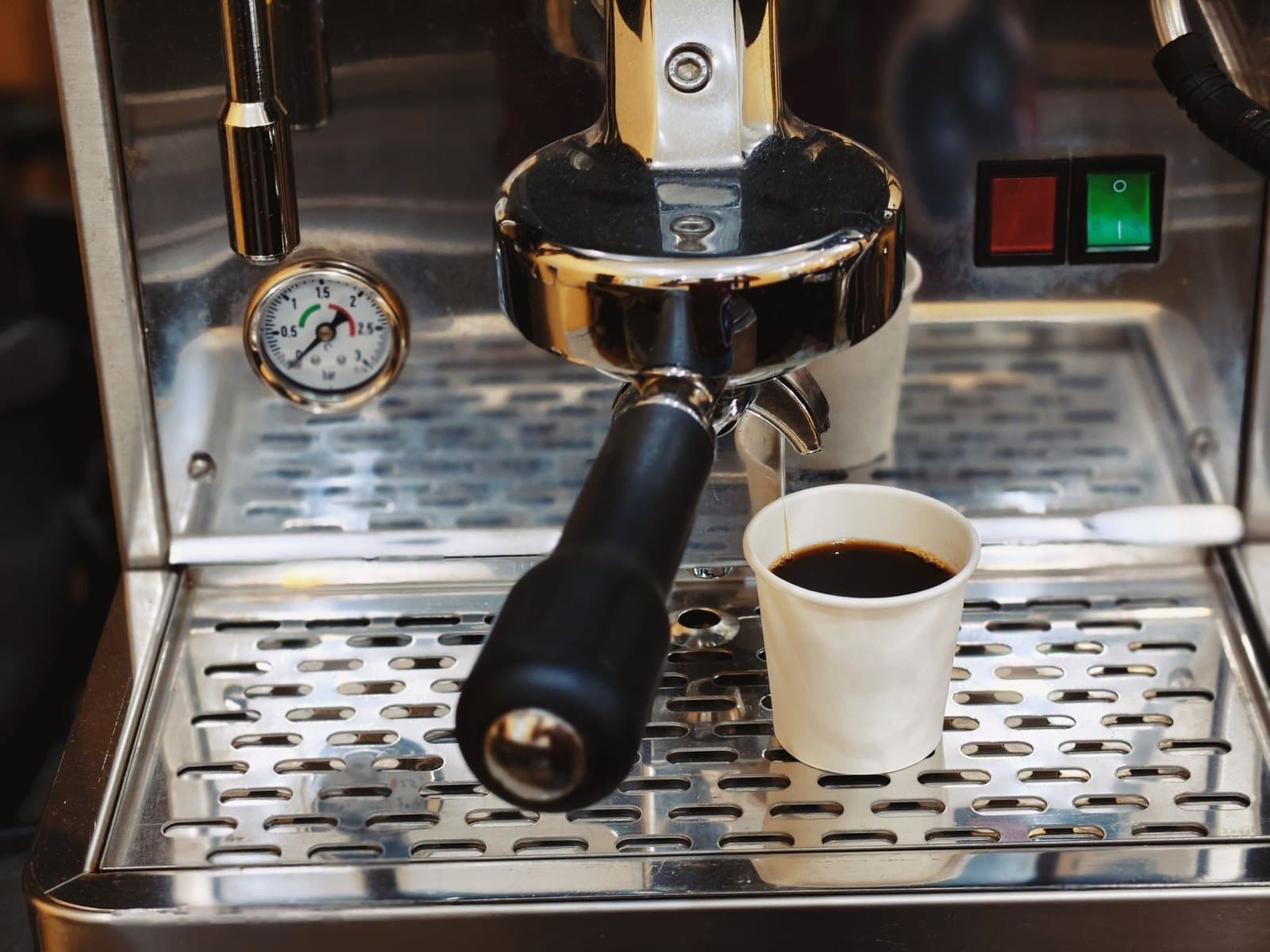
This is a reference work rather than a blog. Articles are organised by subject rather than by date, they are revised in place as better sources appear, and each one states in a single sentence what it adds that a reader could not get from the existing top search results. That sentence appears at the top of the article, and if the article does not deliver it, it does not publish.
What is not here is as deliberate as what is. No gear rankings or buying guides, no tasting notes, no brewing methods other than pressurised extraction, and no health claims about coffee. No article claims a measurement that was not actually made and documented. Where the available sources are commercial retailers repeating each other, the site records that the point is undocumented instead of narrating the story as history.
The editorial standards set out which class of source is allowed to carry which kind of claim, and what an article has to clear before it appears here at all.
What the machine delivers to the basket, and where it differs from what the gauge reports.
Burr geometry, alignment and distribution, rather than the micron number on the dial.
What hardness and alkalinity do to extraction, and what they do to the machine.
Yield, solubility and flow through a packed bed, and what the published work establishes.
Symptom to mechanism to remedy, with each branch justified rather than asserted.
The calculators convert the two things worth recomputing rather than remembering: extraction yield from dose, beverage mass and a refractometer reading, and what a weighed salt concentrate actually produces once diluted. Both show their working, and neither prints a target, for the same reason the articles do not repeat figures they cannot source.
1Zpresso’s manuals and comparison page attach microns per click to axial burr travel (8.8 µm on J-Max; 22 µm on K-Max / K-Pro / K-Plus), while the manufacturer’s Coffee Grind Size Chart tabulates those increments under MM per click and…
Cameron et al. (Matter 2020) attribute to the Specialty Coffee Association a historical espresso definition with a ca. 20–30 g beverage-mass parenthetical and a 92–95 °C water band that do not match the SCA 25 Magazine heritage SCAA…
Two heat-exchanger manufacturer manuals attach different brew/outlet figures to the same PID-displayed boiler temperature of 120°C — Makina about 91°C outlet at about 1.2 bar; Rocket Giotto/Mozzafiato 93.6°C Scace brew water — so the…
The March 2001 SCAA Barista Preparation Standards page and the “heritage” SCAA espresso definition quoted in SCA 25 Magazine Issue 3 disagree on dose-unit wording, beverage-volume ounce conversion, brew-water temperature band, and…
Weber Workshops’ EG-1 and KEY product pages both brand a “5 micron stepped adjustment,” while the EG-1 instruction manual attaches “each tick adjusts by 5 microns” to grind numbers it also describes as meaning larger particles, and the KEY…
La Marzocco Strada AV and Linea PB operating manuals attach three different coffee-boiler temperature kinds of claim that do not coincide: Strada’s parts description prints an adjustable operating temperature of 95°C; the same manuals’…
CEME/Ulka’s Family E high-pressure flow table — where model E5 shows 0 cc/min average flow at 15 bar — sits against machine documents that list “Pump pressure 15 bar,” and against De’Longhi EM450M copy that pairs a 15-bar pump figure with…
Free SCAA/SCA brewing-water tables publish calcium hardness without a magnesium preference; Hendon et al. 2014 is a density-functional binding study that argues for Mg²⁺-rich water for yield while hedging macroscopic effects and never…


